Interview with Instructor Seo Yeon Yoon
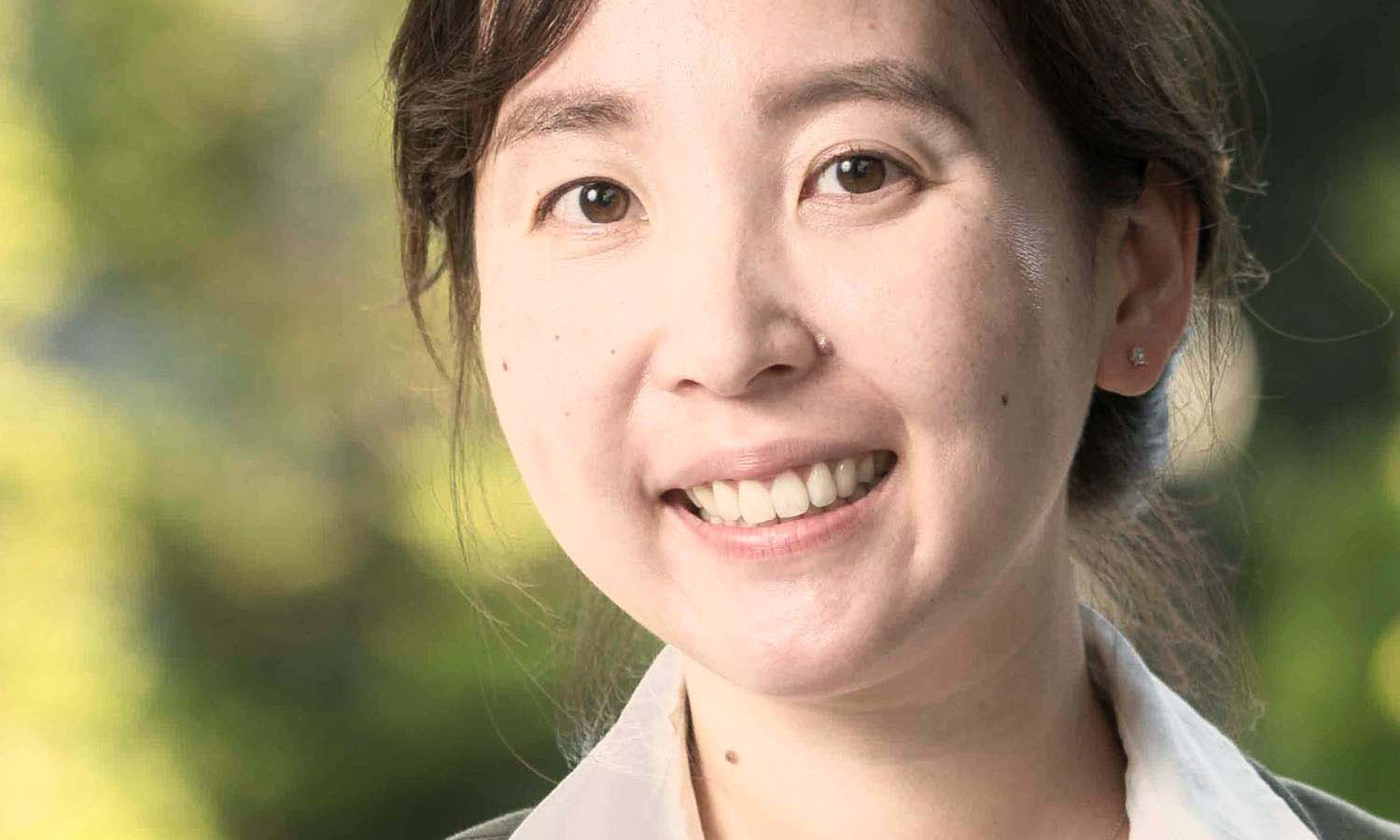
Nathan Prorok interviewed Seo Yeon Yoon, an I-Corps instructor, about the National Science Foundation's I-Corps program and its application within the life sciences. This discussion defines I-Corps' 'customer discovery' tools as a method for understanding patients' complex needs.
The Interview
Nate: How does I-Corps teach potential entrepreneurs to do customer discovery?
Seo Yeon: Ultimately, it is all about talking to people. It’s pure and simple. There's no other way to describe it. We know that these entrepreneurs are already very experienced in their respective expertise in life sciences, in healthcare, and so forth. We know they already have certain assumptions about the problems they are trying to solve for. That's ‘N-of-One’. Now, when we think about solving a real problem, it can't just be for ‘N-of-One ’; it has to be for ‘N-of-many.’ What are real people thinking? What are the assumptions that they also have? It’s through the process of talking to real people and asking them questions that you are trying to test your own assumptions against theirs. What it is that they think about that problem? How they see it. What is their satisfaction level? And what are the different dimensions of the problem that they see? Then you can start testing your own assumptions about whether this is actually accurate or not.
It is through the process of asking questions that you get to really see their point of view and discover what really needs to be done for that problem to be solved. Then you can aggregate that from ‘N-of-One,’ to ‘N-of-two,’ to ‘three,’ to ‘four,’ all the way to 20 at a minimum. At least within the context of the regional I-Corps program. That’s when you start to sense some pattern recognition of what people are truly interested in and how people see the problem you were focused on. And then you kind of go from there. This is the art of the “Q & A.”
Nate: I-Corps, works for a lot of different industries. It's industry agnostic, one could say, for engineering problems, for science problems, technology problems. What about the life sciences, medicine and healthcare? How and why is I-Corps, so important for the life sciences?
Seo Yeon: I couldn't think of any other industry that the I-Corps structure and framework is so pertinent to than life sciences and healthcare. Because we're talking about real people — It’s people who get illnesses, people who get diseases. It’s people who are not immune to the things that happen in the world. When we help entrepreneurs to understand people’s health needs and help them find solutions, there's no other industry in my mind where I-Corps is so applicable.
Nate: One of my favorite parts about your class is how you really help explain to the class who the customers are. If you think of food, the end customer is the person who buys that product from the supermarket. If you think of digital health, the customer is the person who buys the app. But when it comes to the life sciences, healthcare and medicine, someone could be making a small-molecule drug or large-molecule biologic; the customers aren’t necessarily the end user of that product. Please elaborate a little bit more on that, especially when thinking that UCSF, is strictly a healthcare and life sciences University, so our investigators are working on life-saving medicines, or therapeutics, or drugs. Where does customer discovery and the customer discovery interview process come in? How does that impact the therapeutics where the population is often defined by their need for that medicine?
Seo Yeon: One of the things in I-Corps that we talk about is this idea of a customer ecosystem. And that not all customers are created equal. In fact, there are many types of customers, and this is one of the things that we end up discovering by speaking to individuals in a particular ecosystem. In the context of UCSF, I can use my own personal example; when I was with the Gladstone Institutes doing my research in Alzheimer's disease, what we generally think about is that we're doing the research for the ones that are impacted by the disease, whether that be the patients themselves or the caregivers. What we don't always think about is all the different people that have to be part of the equation because we not only deliver the particular innovation that we think is going to be life-changing for the patient, we also need the patient to be champions of our work.
The patients and caregivers also must be the ones that are supporting and advocating for these medicines. So I think the customer discovery, and the recognition of the whole ecosystem for the entrepreneurs, is really one of the crucial steps for any entrepreneur to really start thinking about the different channels, the different relationships, the different partnerships, that they need to start building in order for their innovation to see the light of the day.
Nate: Okay, so a team may have an idea that’s the next best thing since sliced bread, something that is going to cure disease and sickness worldwide, but then you instruct all the teams not to talk about their technology. Why not? Why can’t they talk about technology?
Seo Yeon: You ask, why would I not want to show off my beautiful baby? I have worked on this for a decade or two, or three. Why is this something that I cannot talk about when I'm talking with the people who I know are going to be the beneficiaries of my innovation? It's for the simple reason that we know you're the experts in your respective industry and therefore you have a certain set of assumptions and perspectives of what you think should be done. But ultimately this is about solving their problem, not solving your problem.
People do not care about your innovation. That's one of the hardest lessons. People care about their own problems and their own needs and therefore the solutions that support their needs. In order for us to really be able to understand, we have to take ourselves — as entrepreneurs — out of the equation and put the interview with the customer on the center stage. We must be able to hear from them, in their own words, and what it is that they're going through. Most of the time, it ends up being very different from how the entrepreneur sees it. So, by not having our entrepreneurs speak about their innovation, it allows the entrepreneur and all of us collectively to really get that unfiltered understanding from our customers in a way that it is all about them, not about us. The principle of the I-Corps, is that innovation is great, but it is not great unless if it's in the context of the real people that are going through these things on a daily basis in their lives. We're trying to be very focused on the people, those real people that we're trying to serve, rather than the innovation itself.
Nate: Another big part of I-Corps, in addition to the customer discovery process, is the ‘business model canvas.’ Could you tell people a little bit more about the ‘business model canvas’ and how that is different or similar to the business plan that we’re used to hearing people talking about?
Seo Yeon: The ‘business model canvas,’ sometimes known as BMC, is really a great way for us to be able to visualize what it takes to build a business from the ground up. What are the different elements that are necessary for us to build that particular business that we are trying to build so that our innovations are not left in the laboratory; they're actually being scaled up to the point of a business that we are able to deliver to the patients and the caregivers. it has nine different parts. But during the two weeks of the I-Corps regional program, we focus on the ‘business model canvas’ section, where it talks about the customers and the value propositions. There is also the revenue channels and other pieces of a business plan, but as I’ve discussed, we start with the customer.
Nate: Who are good candidates to take the UCSF NSF regional I-Corps training course? Does it depend on the field that they're in, what they're working on, whether it's a therapeutic, diagnostic, medical device, or digital health product? Does it depend on their stage of innovation? Who would you recommend taking I-Corps training?
Seo Yeon: We’ve seen medical students, PhD students, we've seen postdoctoral fellows, we've seen Principal Investigators, from associate and assistant professors all the way to tenured full-time professors. This is really a curriculum for all. Because it allows you to start thinking about what it takes for your innovation to impact the lives of people daily, this training really should be a requirement for everybody at an institution like UCSF.
If you already are thinking or working on an innovation that has some therapeutic applications, use the program to test your hypotheses and see if this is something that we can scale up. But even for a company that has already gone IPO, we know that markets change, which means the customer discovery process never ends. The core principles that we teach through the I-Corps program, are applicable for everyone at every single stage of development. We ask our participants to show up being very curious and open to being wrong. Because this is a laboratory, come with that open mindset, with that empty white canvas, then you're definitely in for a great ride.
Nate: How would you describe some of the impact that I-Corps has had on teams that you've worked with?
Seo Yeon: One of the beautiful things about the I-Corps program is when students realize that what they thought was to be the truth is wrong. Sometimes even dead wrong. That is the most fantastic moment that we want to see and to be able to celebrate. it turns out that even based on 20 or so interviews, there’re a lot of insights that the teams are learning. The, “wait a minute,” moment. This is not what I thought it would be, and therefore I need to start thinking things very, very differently. I need to be talking with different people. With different groups and institutions, and companies, and community groups. It shifts the entire mindset.
That's what everybody wants at UCSF. They want to get their innovation into the right hands. It is truly one of the great joys of my life to be able to see that sparkle in their eyes and hear them say, “I was dead wrong and here's why I was wrong, and therefore this is what my next steps are.”
We always say the more wrong you are, the more that you're getting out of the program.
Nate: So, speaking of upending an existing hypothesis, can you give a specific story — without revealing maybe too much or anything that's confidential — of a moment where a team's core assumptions going in were upended completely, and they had to reconsider what they were working on?
Seo Yeon: The one example that jumps to my mind was not necessarily a wrong approach, but how they started to see a potential way to expand their business proposition. It was essentially a therapeutic project that this team was working on, and they thought that this was for a particular disease indication in humans. Little did they realize that — wait a minute — there's some agricultural application of our innovation! Now there's a whole new arm of our business that we really need to start thinking about. And that's fantastic because we know that building a business to the point that where it can sustain itself takes quite a long journey. Anytime you're seeing an opportunity, you want to take advantage of that so they can quickly grow. They saw that they could turn this into a profitable business right away, and then use that revenue to work on the original disease indication that they had set out to do in the beginning.
The feedback that I heard from that particular team about a year later was that the I-Corps training shaped how they approached investors. And that's key because a lot of founders get lost not knowing what channel of investors to go to, whether it's a non-dilutive grant, whether it's a venture capital fund, whatever it may be; they just get lost. But if you're able to create the capital you need on your own. It really impacts the entire way in which you're building your business from the ground up. So, when I saw that, I thought, ‘Great,’ this business actually has some opportunity. I'm so grateful that they were able to see that, because they were able to engage in those conversations during their customer discovery interviews.
Nate: We have been discussing regional I-Corps, and we're so fortunate to have you as an instructor because in addition to being a regional instructor, you're also a national instructor. Would you be able to give us a little insight into this? When we were working with these investigators, we liked to coach them through the idea of beginning with the end in mind, oftentimes. And so, what are some other opportunities beyond the regional I-Corps? What is the potential for the National I-Corps, and what's involved with that? I'm also hearing more and more that the National Science Foundation is asking for ‘lineage’ when applying for SBIR and STTR grants. If you have any insight that you could share with us, we'd be very appreciative of that.
Seo Yeon: The beauty of the regional I-Corps program is that we start to build muscle memory for our entrepreneurs. They begin to understand the general framework of I-Corps itself, and you can build that muscle within the regional program and then to scale up to use at a national level. The regional program asks a participant to conduct 20 interviews during the two to two-and-a-half week course. The national program is asking for 100 interviews within about two months. In addition, at the national level, we dive deeper into the business model canvas, the other areas of the canvas that we just do not have the bandwidth all the time to really delve into in two weeks. Things like revenue, channels, and partnerships.
The NSF is priming the regional and the National I-Corps Program to become applicants for Small Business Innovation Research (SBIR) grants because it takes a certain kind of business mindset that can appreciate the needs of the customers that is required for your innovation to go beyond the walls of the laboratory. To be thinking about the technology as a business rather than a research project is a very different kinds of mindset, and both the regional program and the national program are great to start building the muscles that many of the researchers don't have the opportunity to work on as part of their training in graduate school.
Nate: Looking ahead, big picture, where do you see the future of the I-Corps program? How would you like to see the arc of this program move forward?
Seo Yeon: I would really, really love to be able to have the I-Corps framework and the training curriculum in some shape or form as part of all graduate school training, whether the young trainees are interested in business or not. Having the business mindset that we teach within the I-Corps framework, where you're talking with real people, heightens that sense of responsibility. I think it would have tremendous impact on their education, teaching them to solve the actual problems that they care about. That obviously impacts the way in which the life science industry and businesses really run. This is about real people, real lives, real problems, and that the ‘customer’s needs’ mindset is necessary for us to really practice.
Nate: By incorporating this earlier in a student's life, getting it into their programing that the demand-side economics, which is another way of looking at it, becomes inherent to the way that they think while their minds are still pliable.
Seo Yeon: By making this a part of them, rather than just being in their awareness, we can really shift the way in which they are designing their experiments. Being able to get in there at their early stage now opens up even more doors and even more dreams that I think the rest of us have yet to venture into. What an awesome world would that be. That's my small personal dream that I have in the grand scheme of things when it comes to I-Corps.
Nate: Thank you very much, Seo Yeon. It was a pleasure to chat with you today, and we are very grateful that you are a part of the Innovation & Entrepreneurship ecosystem at UCSF Innovation. We look forward to the upcoming UCSF NSF Regional Training Course with you in October.
Seo Yeon: Thanks, Nate. I appreciate the opportunity and also look forward to working with the UCSF Frontline Innovators.