LaunchBio’s Invest in Cures
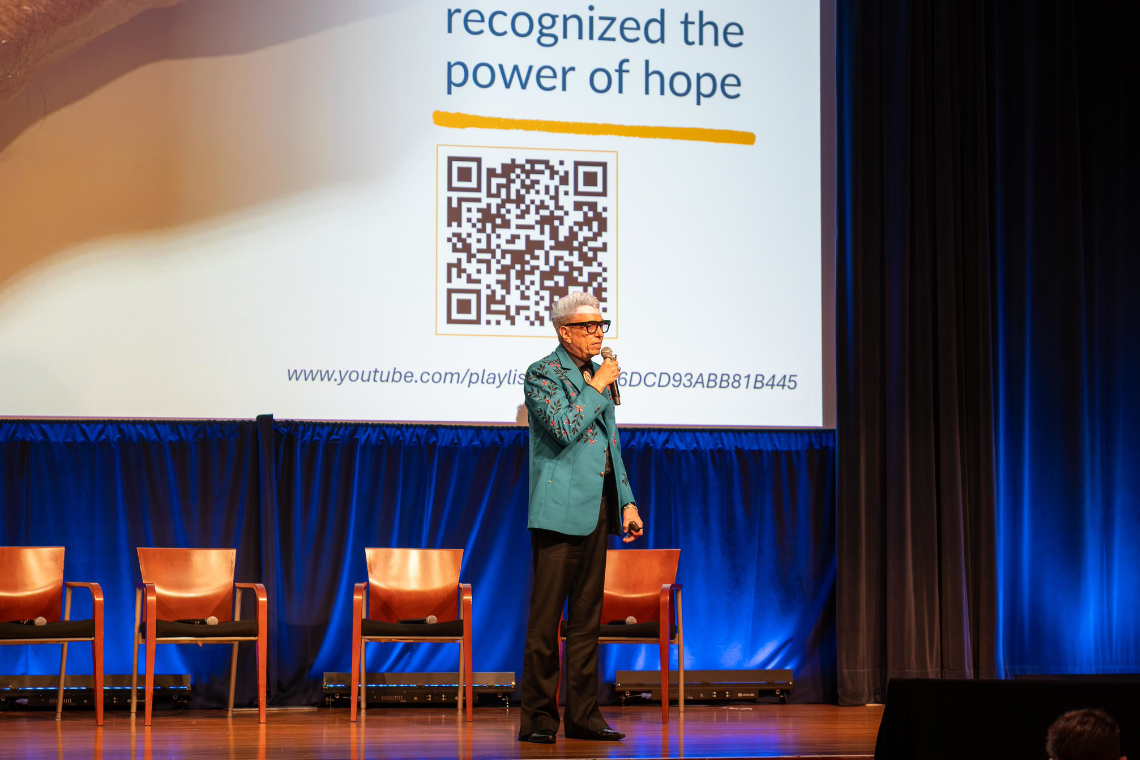
Many times, when people are diagnosed with a rare disease, patients and their families look to the medical establishment for one thing: Hope.
“If you look across almost every disease where hope has been studied, people who have more of it are doing better medically,” Richard Bedlack, MD, PhD, director of the Duke University ALS Program, told a UCSF audience in February. “They have better quality of life scores. They have a lower symptom burden. They live significantly longer than people with lower hope scores.”
Bedlack spoke at LaunchBio’s Invest in Cures event, which took place a day before the UCSF Catalyst program’s symposium, “Where Science Meets Silence: Innovation in Rare Diseases.”
LaunchBio is a nonprofit organization that connects early-stage life science entrepreneurs with capital and talent.
Academic institutions like UCSF are a fertile territory for investors and the biotech industry as they seek talent and ideas, said Peter Kotsonis, PhD, Assistant Vice Chancellor of Business Development, Innovation and Partnerships, UCSF Innovation Ventures.
“Academia is a rich source of innovation,” Kotsonis said. “One-third of all FDA approved medicines and companies have their roots in academia, and 20 percent of medical devices have their origins at that innovative front line. A lot of discoveries happen inside our walls, but we need partners.”
Often, industry is needed to take the findings from academia and put them into clinical trials or develop them into products. With the Bay Area biotech industry based at UCSF’s front door, Kotsonis said, “we’re in a tremendously vibrant ecosystem.”
Hurdles and Challenges
Other speakers noted the obstacles that often work against finding a treatment for a rare disease.
“Rare diseases are difficult investment propositions,” said Josh Grass, a partner with 5AM Ventures. Investors would rather put their money “in companies that have a high probability of being acquired by a large pharmaceutical company, preferably within five years of making their investment, or an exit through the public markets.”
But, he noted, the rise of contract manufacturing means many smaller products—like those for rare diseases—can be made without building expensive labs and plants.
One advocate for rare disease treatment argued that the system is broken and a new approach is needed.
“Thirty million Americans have a rare disease, but only 5 percent have a treatment,” said James Uyeda, vice president of individual giving for the EveryLife Foundation for Rare Diseases. “The system is failing these patients.”
That’s why his foundation is starting a “Rare Disease Accelerator,” a selective, high-touch program designed to support early-stage rare disease startups. “Family lose years, sometimes decades, and definitely hope,” Uyeda said. “By raising the floor of the pipeline, we want to give these communities a clear, more credible path.”
Rays of Hope
Bedlack, the keynote speaker, spread his message of hope, wearing one of the colorful jackets that have become his trademark—this one in teal and embroidered with glittery leaves and red flowers.
“I believe hope to be a treatment, not just an emotion or a coping strategy,” he said. “It is underutilized.”
Hope can be measured through questionaires, he said, and hope absolutely helps improve patient outcomes. “People with hope engage in healthy behaviors. They don’t smoke or drink,” Bedlack said. “They are compliant with evidence-based therapies. It just makes sense if you are compliant with things we know work, you’ll do better medically.”
In medical school, he said, future doctors are taught to err on the side of being negative. “If you’re right, you’re smart. If you’re wrong, you saved them,” he said. “But the problem is, it robs your patients of hope.”
“In cancer, patients prefer to hear things like, ‘Let’s have a plan A and a plan B.’”
In rare disease, other speakers said, so much progress is being made, giving patients and families cause for hope.
To Jake Lesnik, CEO and co-founder of Dark Matter Therapeutics, rare disease represents a fantastic business opportunity.
“There are over 10,000 known large single gene disorders affecting over 300 million people worldwide,” Lesnik said. “These are patients who, in principle, can be treated and in many cases cured with the right gene therapy and technology. So that's the opportunity that we have.”
“It's an amazing time to be alive.”